Your Russian spring summer encephalitis images are available in this site. Russian spring summer encephalitis are a topic that is being searched for and liked by netizens today. You can Download the Russian spring summer encephalitis files here. Find and Download all free photos and vectors.
If you’re looking for russian spring summer encephalitis pictures information related to the russian spring summer encephalitis topic, you have visit the ideal blog. Our site always gives you suggestions for refferencing the maximum quality video and picture content, please kindly surf and find more enlightening video content and graphics that fit your interests.
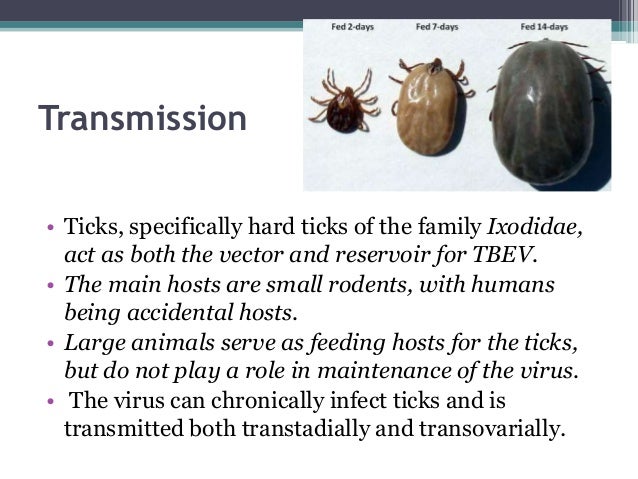
Russian Spring Summer Encephalitis. Relapsing fever-like spirochetes infecting European vector tick of Lyme disease agent. In this paper we describe EPC in the tick-borne Russian spring-summer encephalitis TBRSSE and compare it with Rasmussen syndrome. The central European encephalitis CEE virus found in many European countries and the Russian spring-summer encephalitis RSSE virus found predominantly in the Asian parts of the former Soviet Union. An illness resembling acute poliomyelitis caused by a virus of the Russian spring-summer encephalitislouping ill group in Northern Ireland.
 Prezentace Aplikace Powerpoint From is.muni.cz
Up to 10 cash back The Russian spring-summer encephalitis which is caused by the RSSE virus Flavivirus group B has a mortality rate of up to 2530. Russian spring-summer encephalitis virus tick-borne virus. Myelitis and spinal paralysis also occurs. Relapsing fever-like spirochetes infecting European vector tick of Lyme disease agent. Three virus sub-types are described. TBE is caused by the tick-borne encephalitis virus TBEV a member of the family Flaviviridae and was initially isolated in 1937.
EPC has numerous possible etiologies.
Relapsing fever-like spirochetes infecting European vector tick of Lyme disease agent. It is mainly associated with the tick Ixodes persulcatus but also with. The diagnosis was verified by immunology antibodies against TBRSSE virus. Central European Siberian and Far Eastern formerly known as Russian Spring-Summer Encephalitis. Russian spring-summer encephalitis virus tick-borne virus. Muscular weakness numbness and elevated body temperature persisting for several days usually appear in Russian spring-summer encephalitis ten to 12 days after the bite of an infected tick in a natural focus of the disease.
 Source: pinterest.com
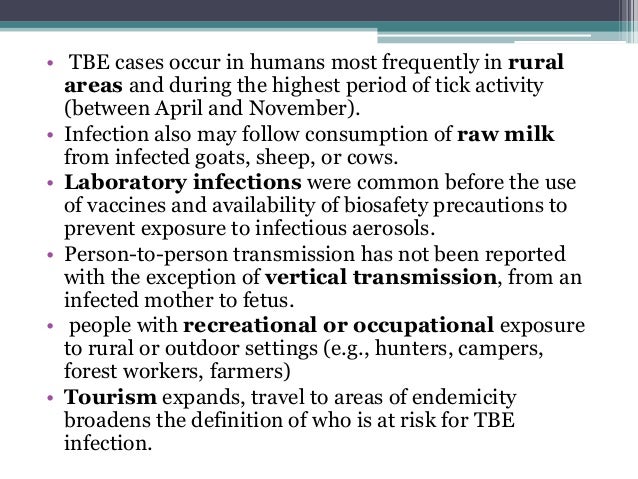
And in a few countries of Eastern Europe. SALS Basis Results of SALS surveys and information from the Catalogue. Muscular weakness numbness and elevated body temperature persisting for several days usually appear in Russian spring-summer encephalitis ten to 12 days after the bite of an infected tick in a natural focus of the disease. It is mainly associated with the tick Ixodes persulcatus but also with. Tick-borne encephalitis TBE is a viral infectious disease involving the central nervous system.
Source: is.muni.cz
Tick-borne encephalitis or TBE is a human viral infectious disease involving the central nervous system. EPC has numerous possible etiologies. Omsk hemorrhagic fever virus OHFV and Russian spring-summer encephalitis virus RSSEV are tick-borne flaviviruses of the genus Flavivirus family Flaviviridae. The viral genomes are relatively stable without significant antigenic variation. Tick-borne encephalitis virus Russian Spring-Summer Encephalitis virus mouse brain 6 days post-infection showing typical flavivirus infection characteristics including multivesiculation in cytoplasm and presence of virions within lumina of endoplasmic reticulum.
 Source: regentstreetclinic.co.uk
581582 1956 Cite. Central European Siberian and Far Eastern formerly known as Russian Spring-Summer Encephalitis. Relapsing fever-like spirochetes infecting European vector tick of Lyme disease agent. The certificate of analysis for that lot of Russian spring-summer encephalitis virus control ascitic fluid V. And in a few countries of Eastern Europe.
 Source: pinterest.com
Russian spring-summer encephalitis definition of Russian spring-summer encephalitis by Medical dictionary. SALS Basis Results of SALS surveys and information from the Catalogue. We included patients with EPC in TBRSSE between 2003 and 2010. Other Information DOC Permit Required Antigenic Group B. Tick-borne encephalitis TBE is a viral infectious disease involving the central nervous system.
 Source: pt.slideshare.net
Russian Spring Summer Encephalitis. EPC has numerous possible etiologies. These viruses are NIAID Category C priority pathogens and potential biothreat agents. And in a few countries of Eastern Europe. Myelitis and spinal paralysis also occurs.
 Source: wikiwand.com
RELATIONSHIP OF EUROPEAN AND ASIATIC STRAINS OF RUSSIAN SPRING-SUMMER ENCEPHALITIS VIRUSES AND LOUPING ILL VIRUS WILLIAM L. Tikbōrn en-sefă-lītis vīrŭs An arbovirus of the genus Flavivirusthat occurs in Central Europe Eastern Europe and Eurasia in two subtypes causing two forms of encephalitis in humans. Russian spring-summer encephalitis definition of Russian spring-summer encephalitis by Medical dictionary. It is a complex of viruses with a wide geographical range from East Germany to Siberia and the Soviet Far East and possibly into North China. Up to 10 cash back The Russian spring-summer encephalitis which is caused by the RSSE virus Flavivirus group B has a mortality rate of up to 2530.
 Source: pt.slideshare.net
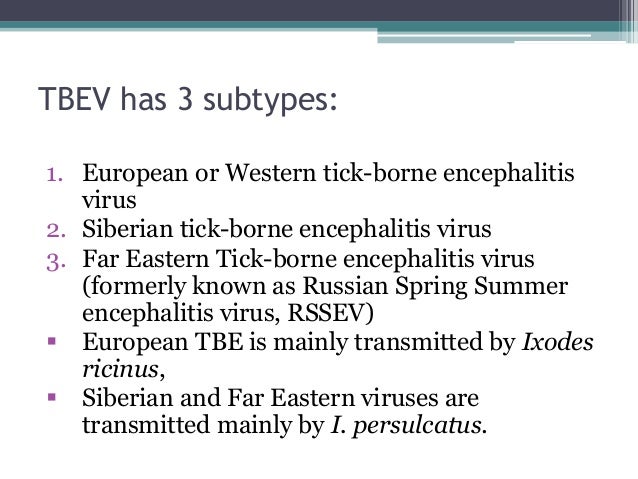
Other Information DOC Permit Required Antigenic Group B. Central European Siberian and Far Eastern formerly known as Russian Spring-Summer Encephalitis. Russian spring-summer encephalitis virus tick-borne virus. Tick-borne encephalitis or TBE is a human viral infectious disease involving the central nervous system. It is mainly associated with the tick Ixodes persulcatus but also with.
 Source: sciencedirect.com
Relapsing fever-like spirochetes infecting European vector tick of Lyme disease agent. Tick-borne Encephalitis is a viral infection caused by one of three tick-borne encephalitis virus TBEV subtypes belonging to the Flaviviridae family. RUSS AND JOEL WARREN From the Department of Virus and Rickettsial Diseases Army Medical Service. Up to 10 cash back The Russian spring-summer encephalitis which is caused by the RSSE virus Flavivirus group B has a mortality rate of up to 2530. And in a few countries of Eastern Europe.
 Source: researchgate.net
RELATIONSHIP OF EUROPEAN AND ASIATIC STRAINS OF RUSSIAN SPRING-SUMMER ENCEPHALITIS VIRUSES AND LOUPING ILL VIRUS WILLIAM L. Central European Siberian and Far Eastern formerly known as Russian Spring-Summer Encephalitis. The certificate of analysis for that lot of Russian spring-summer encephalitis virus control ascitic fluid V. We included patients with EPC in TBRSSE between 2003 and 2010. Tikbōrn en-sefă-lītis vīrŭs An arbovirus of the genus Flavivirusthat occurs in Central Europe Eastern Europe and Eurasia in two subtypes causing two forms of encephalitis in humans.
 Source: pinterest.com
Tick-borne encephalitis or TBE is a human viral infectious disease involving the central nervous system. Tick-borne encephalitis TBE is a viral infectious disease involving the central nervous system. Three virus sub-types are described. The diagnosis was verified by immunology antibodies against TBRSSE virus. Tick-borne Encephalitis is a viral infection caused by one of three tick-borne encephalitis virus TBEV subtypes belonging to the Flaviviridae family.
 Source: researchgate.net
An illness resembling acute poliomyelitis caused by a virus of the Russian spring-summer encephalitislouping ill group in Northern Ireland. European or Western tick-borne encephalitis virus Siberian tick-borne encephalitis virus and. Its viral agent is very closely related to and possibly identical with that of louping ill of sheep long recognized in Scotland. Tick-borne encephalitis TBE is a viral infectious disease involving the central nervous system. 1 TBE is part of the mammalian group of flaviviruses a family of about 70 viruses that includes yellow fever dengue fever and Japanese encephalitis.
 Source: pt.slideshare.net
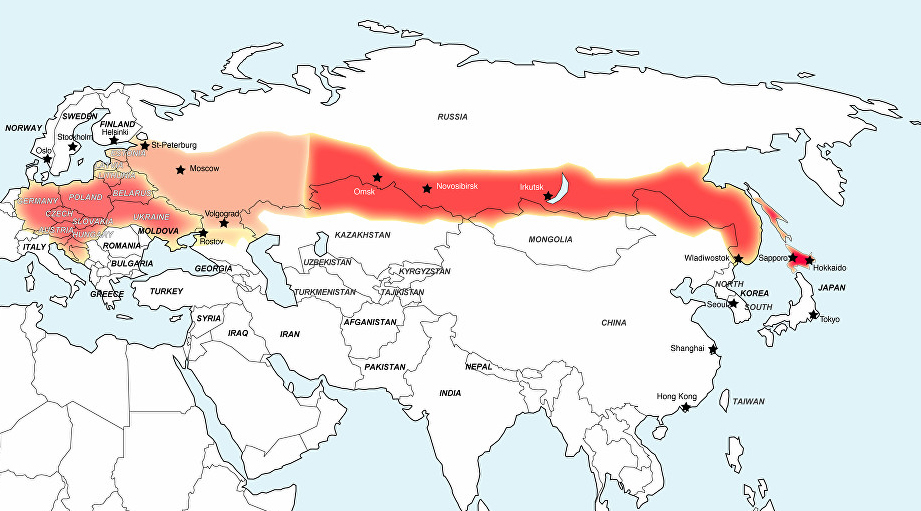
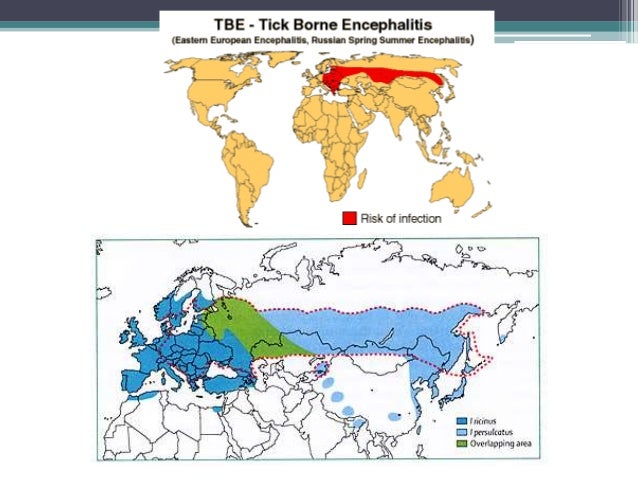
1 TBE is part of the mammalian group of flaviviruses a family of about 70 viruses that includes yellow fever dengue fever and Japanese encephalitis. It is a complex of viruses with a wide geographical range from East Germany to Siberia and the Soviet Far East and possibly into North China. Nonfatal infections in laboratory workers with the virus of louping ill have. The central European encephalitis CEE virus found in many European countries and the Russian spring-summer encephalitis RSSE virus found predominantly in the Asian parts of the former Soviet Union. Its viral agent is very closely related to and possibly identical with that of louping ill of sheep long recognized in Scotland.
 Source: pt.slideshare.net
Up to 10 cash back The Russian spring-summer encephalitis which is caused by the RSSE virus Flavivirus group B has a mortality rate of up to 2530. Farlex Partner Medical Dictionary Farlex 2012. Tick-borne encephalitis virus Russian Spring-Summer Encephalitis virus mouse brain 6 days post-infection showing typical flavivirus infection characteristics including multivesiculation in cytoplasm and presence of virions within lumina of endoplasmic reticulum. Myelitis and spinal paralysis also occurs. RUSS AND JOEL WARREN From the Department of Virus and Rickettsial Diseases Army Medical Service.
 Source: researchgate.net
In this paper we describe EPC in the tick-borne Russian spring-summer encephalitis TBRSSE and compare it with Rasmussen syndrome. An illness resembling acute poliomyelitis caused by a virus of the Russian spring-summer encephalitislouping ill group in Northern Ireland. Russian spring-summer virus encephalitis has been recognized in man in parts of the European and Far Eastern U. Other Information DOC Permit Required Antigenic Group B. Up to 10 cash back The Russian spring-summer encephalitis which is caused by the RSSE virus Flavivirus group B has a mortality rate of up to 2530.
 Source: semanticscholar.org
It is mainly associated with the tick Ixodes persulcatus but also with. The diagnosis was verified by immunology antibodies against TBRSSE virus. The disease most often manifests as meningitis encephalitis or meningoencephalitis. In Russia where 5000 to 10000 cases occur yearly it is still commonly called spring-summer encephalitis. It is mainly associated with the tick Ixodes persulcatus but also with.
This site is an open community for users to do sharing their favorite wallpapers on the internet, all images or pictures in this website are for personal wallpaper use only, it is stricly prohibited to use this wallpaper for commercial purposes, if you are the author and find this image is shared without your permission, please kindly raise a DMCA report to Us.
If you find this site value, please support us by sharing this posts to your preference social media accounts like Facebook, Instagram and so on or you can also save this blog page with the title russian spring summer encephalitis by using Ctrl + D for devices a laptop with a Windows operating system or Command + D for laptops with an Apple operating system. If you use a smartphone, you can also use the drawer menu of the browser you are using. Whether it’s a Windows, Mac, iOS or Android operating system, you will still be able to bookmark this website.